
System Collapse
A ten-month account of whistleblower retaliation and transnational repression following protected disclosures on ethical and human rights failings in UK AI governance, and what it represents.

Timeline of Events - 2025
January
9th: I resigned from my role as an AI Risk Advisor at DSIT’s Central AI Risk Function due to discrimination and a hostile work environment (constructive dismissal). I was one of only two full-time female colleagues in an otherwise all-male team for the majority of my tenure. My resignation letter, in which I detailed serious concerns, was unacknowledged by CAIRF’s joint heads.
27th: I decided to travel abroad to recover from the toll of months of navigating a hostile and discriminatory work environment and the resulting damage to my career trajectory and professional standing.
February
6th: After receiving no acknowledgement of my resignation from CAIRF’s joint heads, I escalated my concerns in an email to Emran Mian, then DSIT’s Director General for Digital Technologies and Telecoms (now Permanent Secretary). I explained that bias and discrimination occurring within a team responsible for mitigating AI bias and discrimination fundamentally undermines CAIRF’s integrity and credibility.
7th: A former colleague corroborates CAIRF’s hostile culture in an email to me.
11th: I met with Emran to discuss my concerns. Immediately after the meeting, my government-issued mobile phone is remotely disabled and flagged as ‘reported missing’.
12th: I received my formal end of employment letter from DSIT, one month after my resignation and one day after my meeting with Emran.
28th: I travelled from London to Sapporo.
March
11th: Despite having withdrawn my consent to participate and Emran having acknowledged this in writing, I received an email from a Deputy Director in DSIT asking me to take part in a “culture review” of CAIRF at the request of Emran.
16th: I asked Emran if DSIT will address the discrimination I faced. Three days later, I am issued a sudden salary “debt”, despite prior verbal confirmation from my line manager that I would receive the full month’s salary.
25th: I formally disputed the alleged “debt”.
April
9th: Six minutes after receiving private legal correspondence to my Gmail account from a law firm, I received a call from a UK mobile number with an automated voice instructing me to “message the number on WhatsApp.”. I was rarely receiving telephone calls at the time. The timing and content of the call raised concerns about potential metadata surveillance of my private communications.
20th: I received a telephone call originating from Silverado, California, a small, unincorporated community with a population of only 932. Silverado has no major infrastructure other than the Orange County Intelligence Assessment Center.
22nd-23rd: Concerned that my Google account was compromised, I extracted important travel and personal information, changed my password and logged out of all devices.
I experienced an acute neurological reaction triggered by the extreme stress of state-level targeting, with severe pain radiating down the left side of my body, and attend the emergency department at Nagoya University Hospital, resulting in a medical bill of nearly £400. I’m unable to access my travel insurance as it was linked to my Google account.
23rd: Shortly after reinserting my UK SIM into a new mobile phone I had to purchase, I received a call traced to Bude, Cornwall. Bude is the site of GCHQ Bude, a SIGINT (signals intelligence) listening post.
25th: In the absence of legal or institutional support, I began publishing on Substack under the pseudonym “syro”.
May
1st: I attempted to transfer money from Barclays to my Revolut account. My Revolut balance decreases following the transfer, resulting in a loss of around £500.
9th: I sent letters to 12 desks across several Japanese government departments regarding UK-origin intelligence activities occurring on Japanese soil, invoking Japan’s national sovereignty. I enclosed copies of my passport, entry stamp, departure date, and confirmed that I was peacefully travelling from Hokkaido to Okinawa. I also disclosed that I am a former UK government employee who blew the whistle on ethical failures in UK AI policymaking, and referenced my publications on Substack.
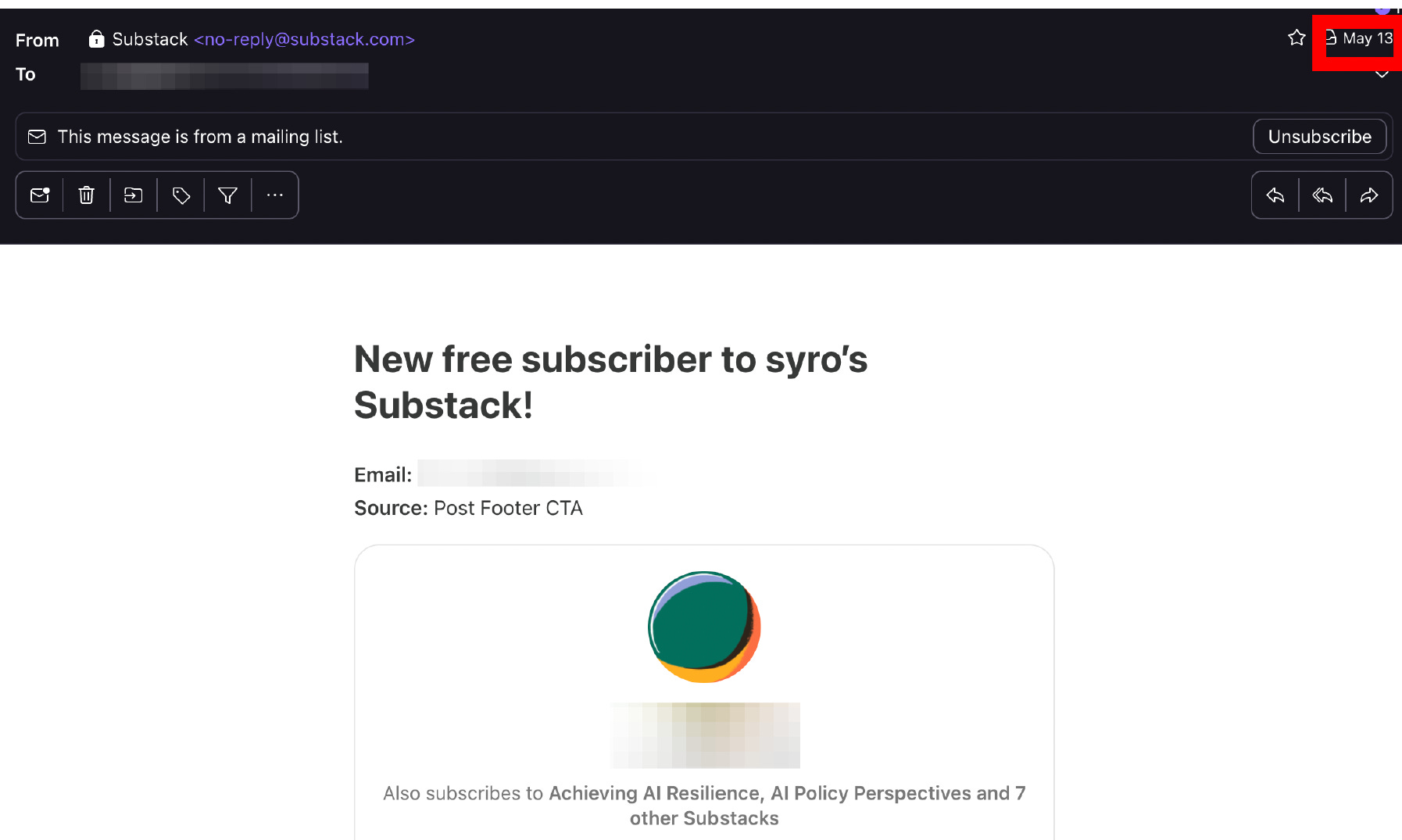
13th: I published an article regarding my hospital visit in Nagoya. Immediately afterwards, a former colleague from CAIRF subscribed to my Substack using a profile with his full name and personal email address. I had not been in direct contact with this individual whatsoever since leaving CAIRF.
18th: An attempted breach of my Substack account occurred. I received an email from Substack containing a log-in verification code, despite not attempting to log in myself.
21st: I received a backdated letter at my UK address from the Student Loans Company (dated late March), demanding employment information within six weeks otherwise I would be charged the highest interest rate on my loan balance.
29th: My final full day in Japan. I’m unexpectedly logged out of my Spotify account following weeks of repeated, abnormal cookie prompts (around nine in total). I am unable to log in to my Spotify account on my primary mobile phone for a month after this, although I was able to log in on my second mobile phone.
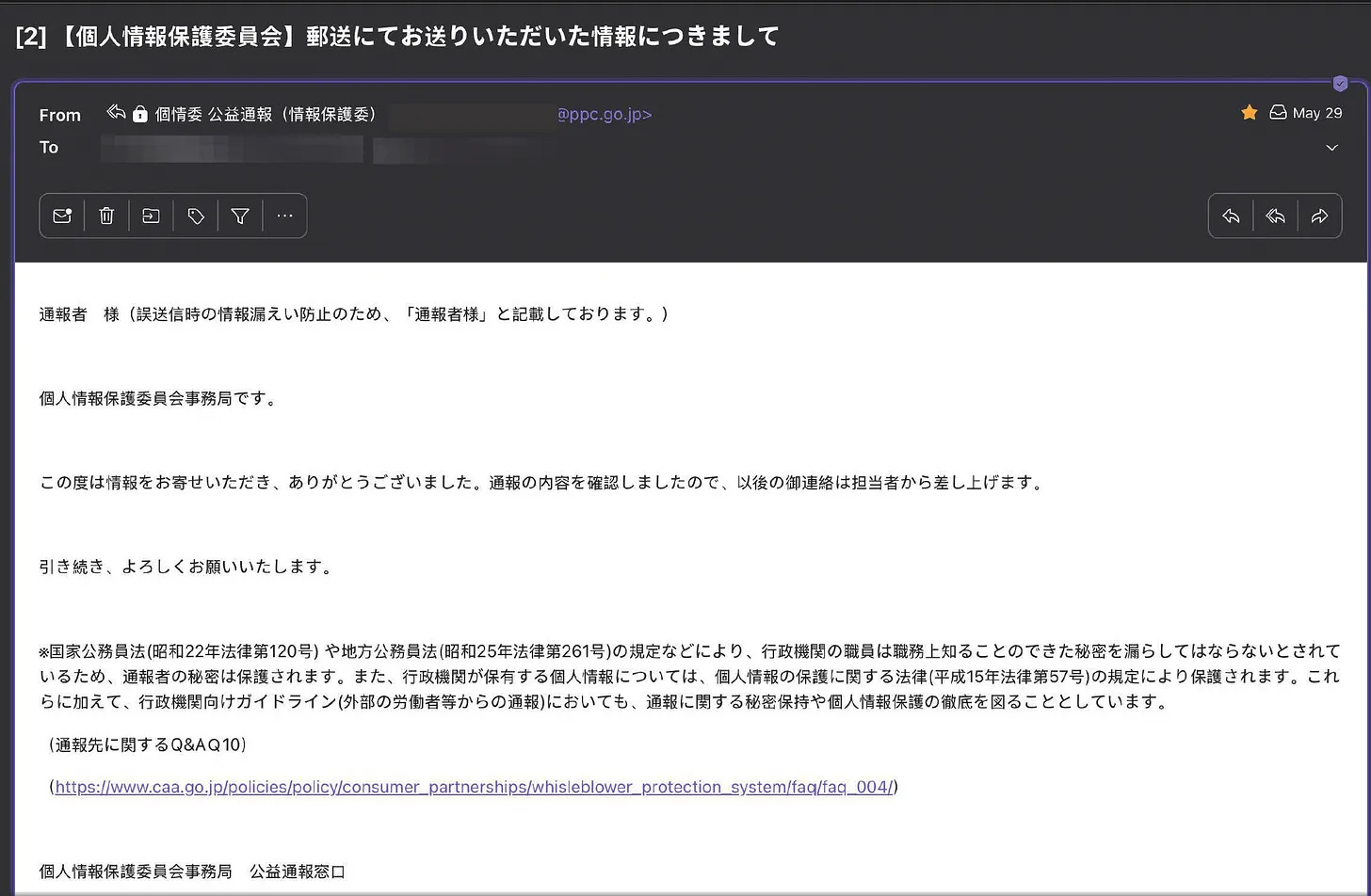
29th: Japan’s Personal Information Protection Commission contacted me regarding the disclosures I sent by post. NHK WORLD Japan published an article and broadcasted a new bulletin referencing “concern about attacks on human-rights activists and journalists outside national borders”, language that aligned directly with my disclosures to the Japanese government.
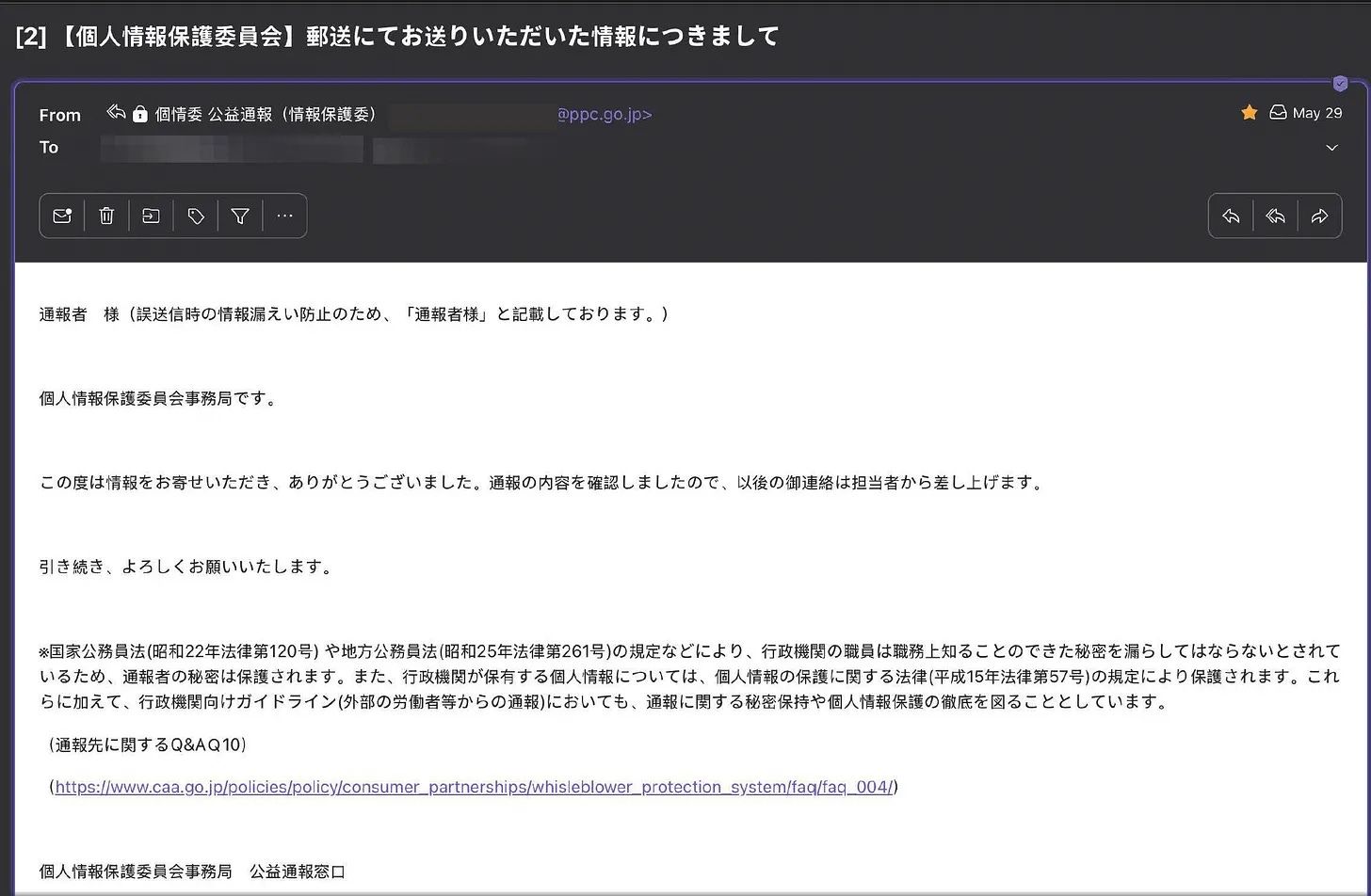
Japanese to English Translation:
SUBJECT: [Personal Information Protection Commission] Regarding the Information You Sent by MailBODY: Dear Whistleblower (we refer to you as “Whistleblower” to prevent information leaks in case of erroneous transmission),
This is the Secretariat of the Personal Information Protection Commission.
Thank you very much for providing the information. We have reviewed the contents of your report, and from here on, a responsible staff member will be in contact with you.
We appreciate your continued cooperation.
Please note: In accordance with provisions such as those in the National Public Service Act (Act No. 120 of 1947) and the Local Public Service Act (Act No. 261 of 1950), officials of administrative agencies are prohibited from disclosing confidential information learned in the course of their duties. Therefore, the confidentiality of whistleblowers is protected. In addition, personal information held by administrative agencies is protected under the Act on the Protection of Personal Information (Act No. 57 of 2003). Furthermore, the administrative agency guidelines (regarding reports from external workers, etc.) emphasise strict confidentiality of reports and protection of personal information.
(Q&A on reporting destinations – Q10)
Personal Information Protection Commission Secretariat – Whistleblowing Contact Point”
30th: I travelled from Okinawa, Japan to Chiang Mai, Thailand via Hong Kong.
I reached out to a Deputy Director I previously worked with at the Government Legal Department (GLD) seeking de-escalation and remedy, notifying her of engagement from the Japanese government. Her advice upon learning about the Japanese government’s involvement is for me to contact DSIT HR.
June
2nd-3rd: Cyber harassment, surveillance and tracking escalated dramatically after I arrived in Thailand. I’m unexpectedly logged out of Apple Music, similarly to how I was logged out of Spotify, online banking apps malfunction, my phone slows down.
3rd: In a Chiang Mai hostel dorm, my Apple AirTags are remotely tampered with, emitting sound without any interaction from me on three occasions in a single day. Two female US nationals are present at the time. I deactivated my AirTags and disabled location services on my devices.
13th: An AirTag is found detected near me, pinpointed to my location in a Bangkok hostel.
17th: The UK co-signed a G7 leaders’ statement on transnational repression that explicitly condemned:
“Digital transnational repression, such as doxing and sexualised smear campaigns particularly targeting women, to induce compliance, silence, threaten, discredit, or retaliate;
Misuse of spyware and cyber tools to engage in surveillance, and to enable physical targeting and tracking, hacking, or cyber harassment”
17th-20th: I experienced 5G and wi-fi connectivity suppression on both of my mobile devices, my laptop and across two separate Bangkok hostels.
20th: I experienced an acute somatic response to the unrelenting state-level pressure. The extreme toll manifested in vomiting, nausea, and total physical exhaustion.
21st: My birthday. Feeling increasingly unsafe and alarmed due to escalating transnational repression, including location tracking and the ongoing and escalating constraints on my ability to get online and communicate, as well as the impact on my physical health, I made an appointment with the Swiss Embassy in Bangkok following the advice of an NGO I had contacted earlier in June.
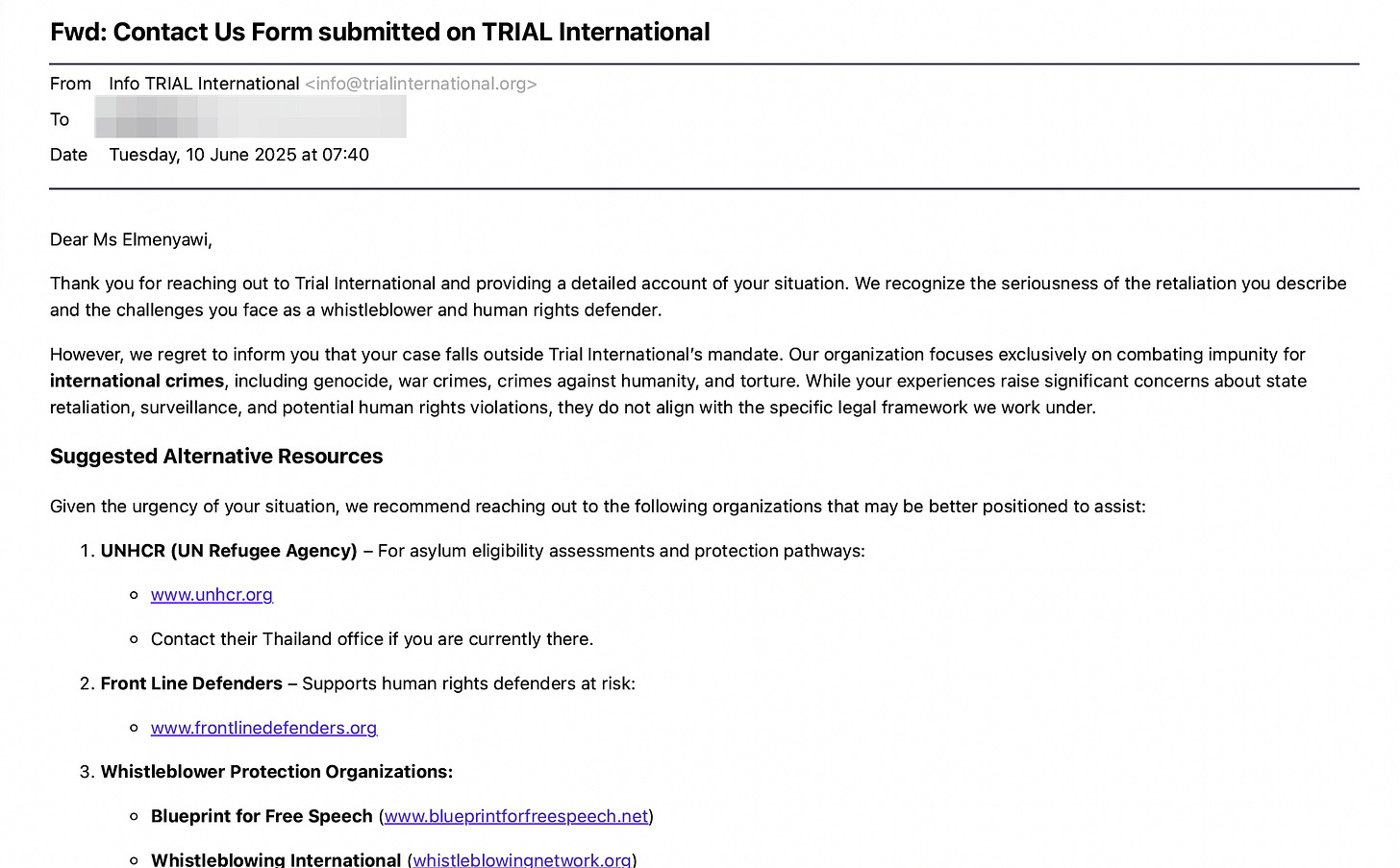
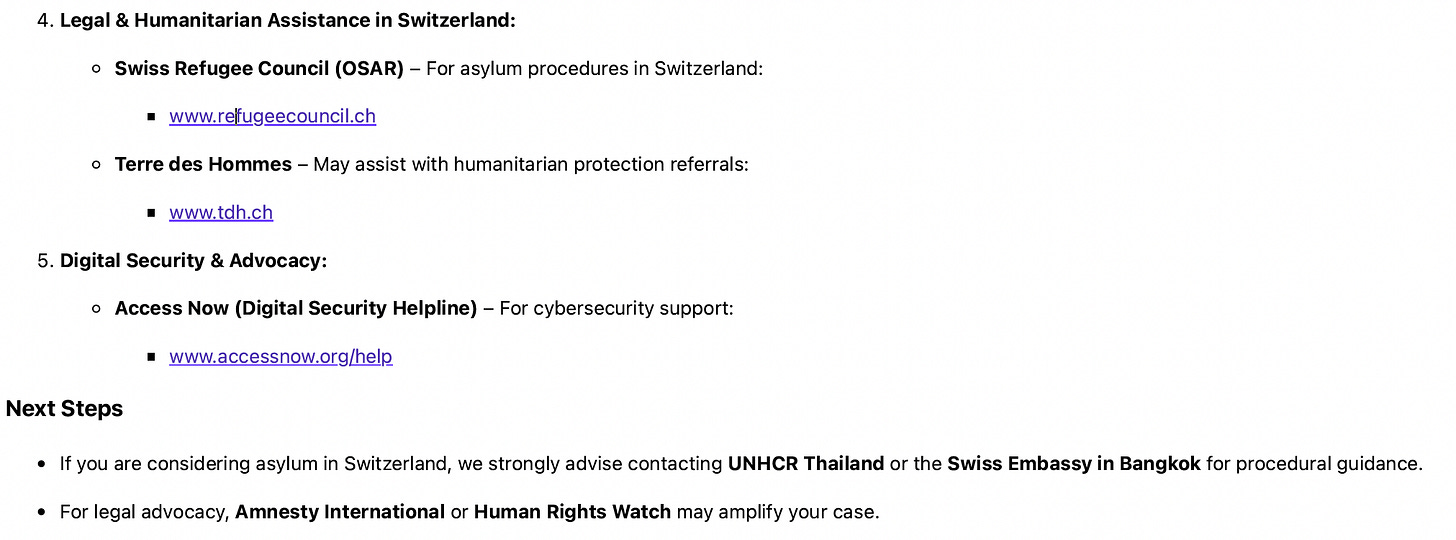
23rd: I attended my appointment at the Swiss Embassy in Bangkok.
24th: I circulated photographic evidence of my presence at the Swiss Embassy to over 30 civil servants, including Emran Mian, to ensure that HMG cannot later claim they were unaware of my intention to seek protection, and to create a paper trail with internal witnesses. One hour later, I received an email rejecting my salary overpayment appeal. The appeal decision was withheld for a month. The month-long delay in communicating the decision to me is later explained as the result of a “misunderstanding on who would provide the outcome of the appeal”. Despite repeated requests for clarification, the explanation for the delay was not provided until November 2025.
26-27th: I reached out to the Deputy Director from GLD, requesting urgent clarification on whether the UK Government was relinquishing its duty of care toward me as a British national abroad. I expect an evasive response, which I receive on record. I’m advised once again to speak to DSIT HR. The question regarding duty of care is left unanswered and I am not referred to consular services.
July
2nd: I fled from Thailand to Switzerland on a flight route from Bangkok to Geneva with a connection in Zürich (BKK-ZRH-GVA). I requested asylum upon presenting myself at the Swiss border in Zürich. Mere days after my arrival, a male, middle-aged, white British national arrived at the Zürich Airport asylum processing centre and was later transferred to Bundesasylzentrum Zürich, where I was also held.
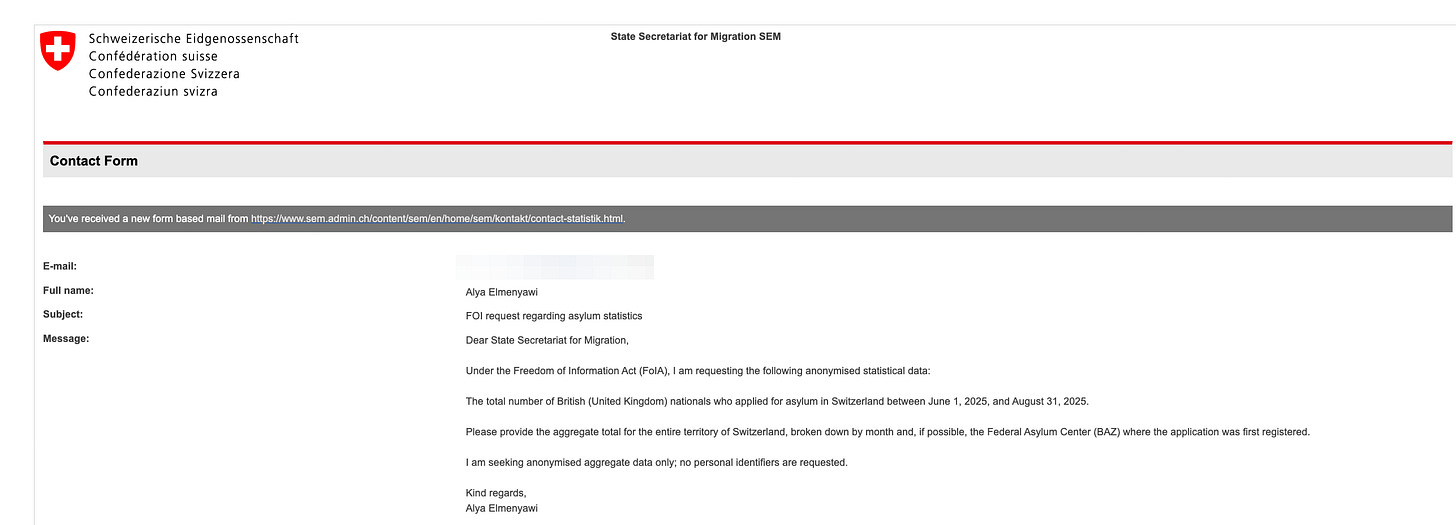
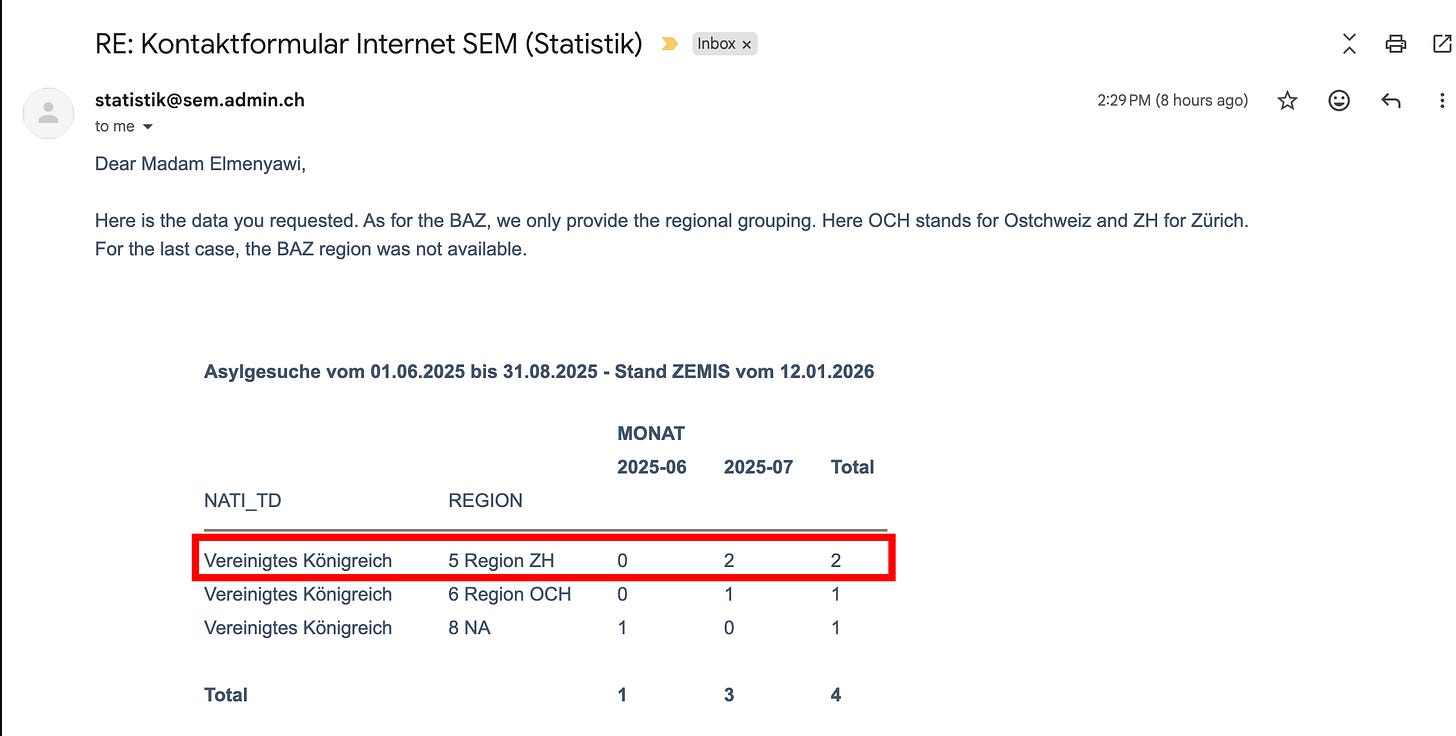
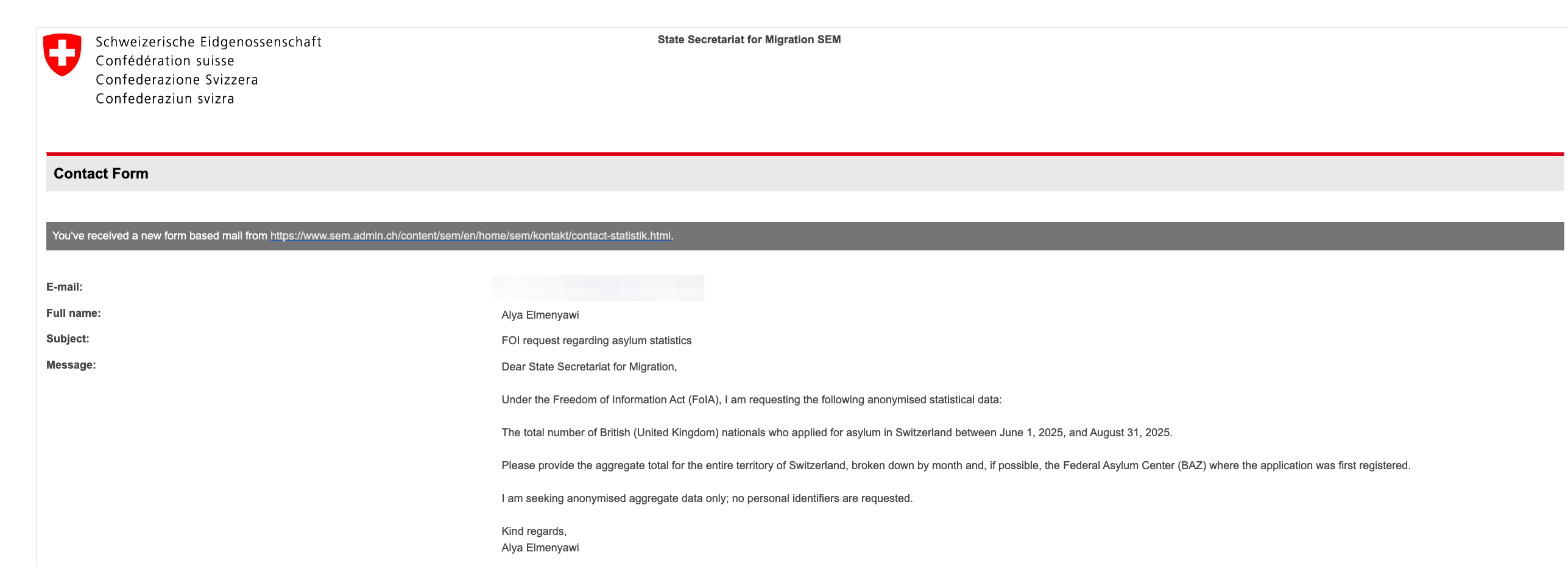
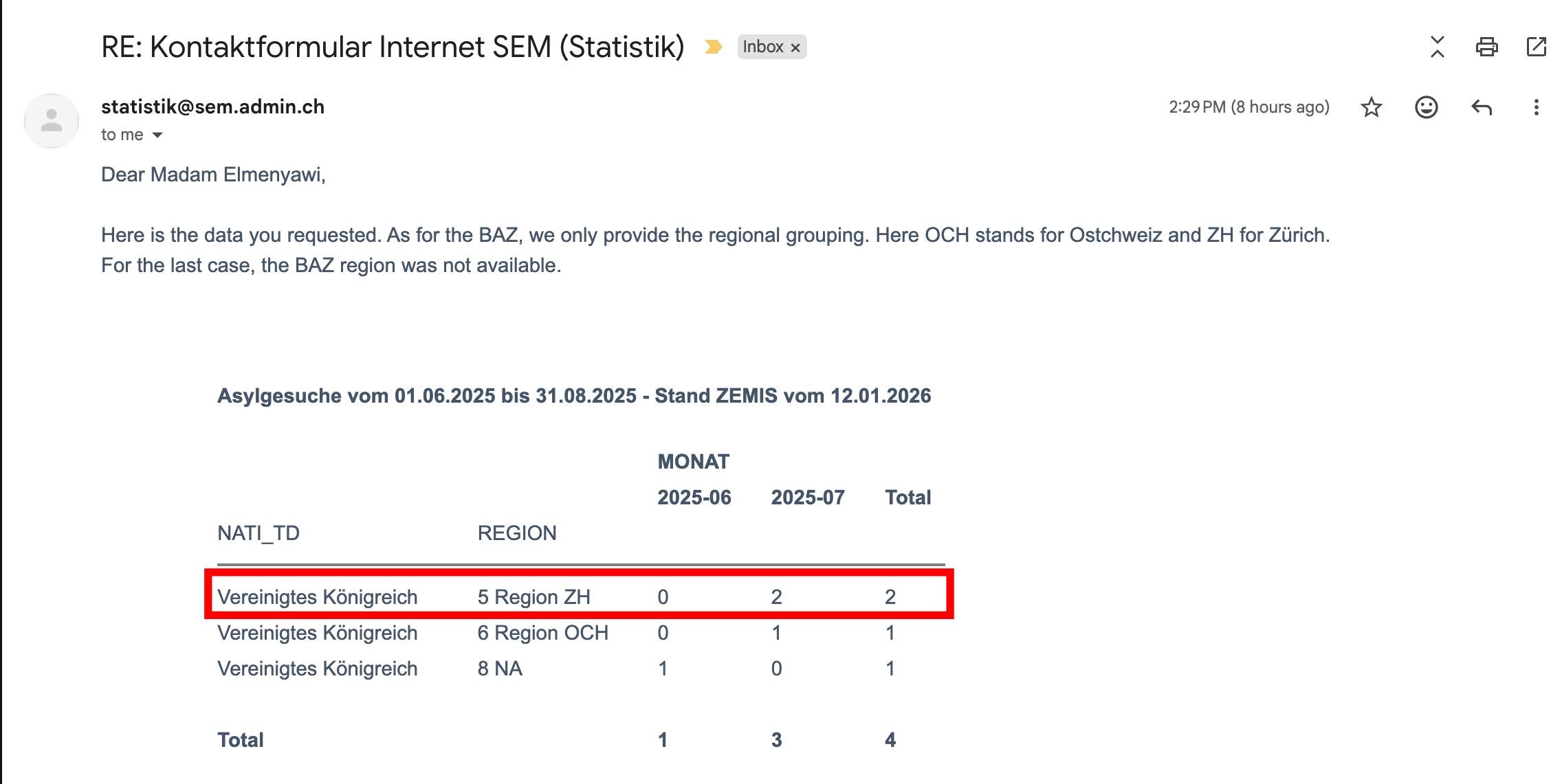
Updated 15/01/2026: I requested official statistics from Switzerland’s State Secretariat for Migration (SEM) regarding British nationals seeking asylum between June and August 2025. When I arrived, an AOZ (Asylorganisation Zürich) social worker told me they typically see only one Brit, one American and one Australian per year. For a British national fleeing state persecution and seeking asylum in Switzerland, Geneva is the only logical destination. It is the closest entry point from the UK and is the seat of the United Nations (OHCHR and UNHCR) and international human rights NGOs. In July 2025, 2 British nationals applied for asylum in Zürich within approximately 72 hours of each other. I was the first. 5th: I submitted several Freedom of Information (FOI) requests to DSIT.
5th-8th: I reactivated my UK SIM for the first time since April. I received duplicate SMS messages containing Zürich Airport wi-fi login codes from a UK telephone number, including one sent nine hours after I had already left the airport for Bundesasylzentrum Zürich on 8th July.
13th: I reactivated my LinkedIn account and attempted to connect with at least 50 civil servants. None accept.
17th: I’m transferred from Bundesasylzentrum Zürich to Bundesasylzentrum Embrach.
17th: After leaving public comments on the LinkedIn posts of Emran Mian and Feryal Clark, I experienced 5G and wi-fi suppression within the asylum centre. Connectivity is restored within 24 hours after documenting this on Substack.
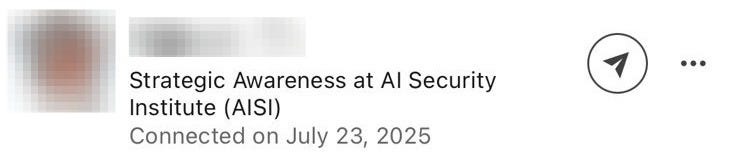
23rd: I published an article detailing physical location tracking in Thailand. Two former DSIT colleagues suddenly accepted my LinkedIn requests immediately after publication:

August
4th: I attended my asylum hearing.
5th: DSIT responded to my FOI requests. None are substantively answered.
13th: I received the draft negative asylum decision from Switzerland’s State Secretariat for Migration (SEM).
Despite:
State-level engagement from Japan’s Personal Information Protection Commission
Engagement from Swiss NGO TRIAL International expressing concern regarding state retaliation, surveillance and human rights violations
Evidence of digital interference occurring on Swiss soil whilst under the formal protection of the Swiss Confederation
Unanswered question regarding duty of care and denial of consular services
SEM denies asylum based on the following:
“Without examining the individual incidents for their technical plausibility, the SEM determines that the alleged surveillance measures appear to be incidents that suggest technical disruptions of another kind.”
I am told that I must pay CHF 750 to appeal the decision and either represent myself or rapidly secure alternative legal representation. I am offered the opportunity to submit comments to SEM regarding the draft decision. I mentioned that I had recently been approached by a journalist covering AI at a globally respected publication covering international affairs, business, and policy regarding my case.
14th: I received the final negative asylum decision. The asylum lawyer admits to me that I would have had “a better chance of being granted asylum if my case was more high-profile”.
19th: A violent attack between asylum seekers occurred just outside the perimeter fence of Bundesasylzentrum Embrach. Those of us inside, including children, witnessed the aftermath as ambulances and an air ambulance arrived at the scene.
20th: I left Switzerland for Ireland. The SEM funded a private taxi to take me to the airport. I’m also given CHF 50 in cash from Swiss authorities upon my departure, which I signed a document for (asylum applicants from visa-exempt countries are not typically afforded financial support).
September
1st: A DSIT civil servant with a background in whistleblowing, freedom of expression and human rights accepted the LinkedIn request I sent in July.
11th-18th: I published a series of now archived minimal articles highlighting ongoing cyber harassment and psychological pressure, evidenced by daily and consistent monitoring of my Substack. During the same period, my former line manager from CAIRF suddenly accepted my LinkedIn request from two months ago.
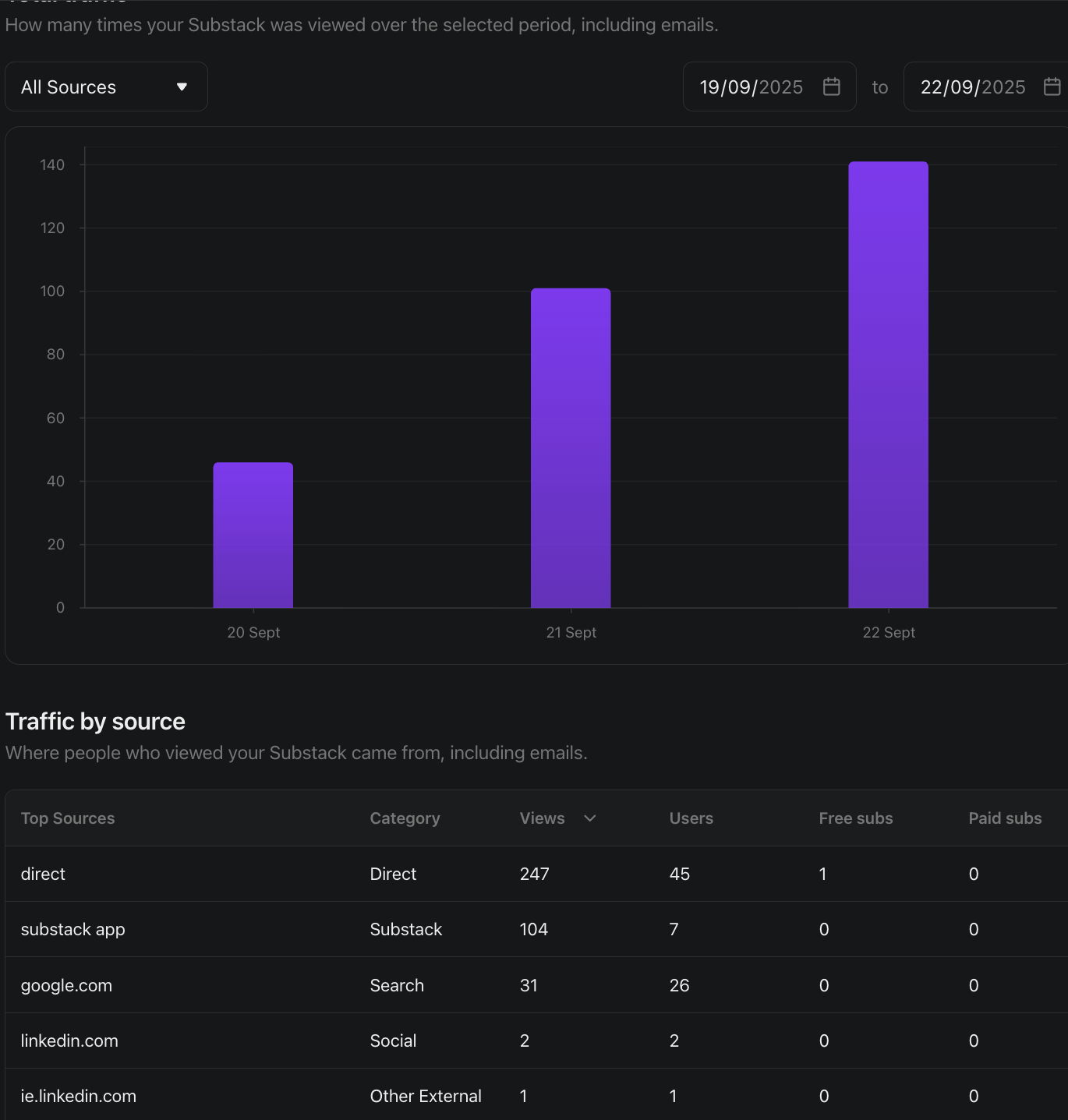
19th-22nd: I set my Substack to private mode, meaning it is accessible only to subscribers. Despite this restriction, the site registers almost 400 visits in a short period.
22nd: I received a notice regarding the alleged “debt”, stating that “the expectation is that the full overpayment amount must be repaid in full. Therefore, if no further response is forthcoming by 30/09/2025, UKSBS will look to recover the full overpayment amount on behalf of the Department.”
October
2nd-6th: Facing an increasingly precarious situation and at risk of homelessness, I decided that returning to the United Kingdom is my only viable option.
In December 2024, several UN Special Rapporteurs raised concerns regarding “powers under counter-terrorism legislation [that] have been used on multiple occasions to examine, detain, and arrest journalists and activists, particularly at the UK border”:

Given the scale and severity of reprisals I have experienced across multiple foreign jurisdictions and the UK Government’s concerning pattern of detaining state critics at airports, subjecting them to intimidation, interrogation, DNA collection, and device seizure, I determined that it was dangerous for me to return home to the UK through its airports.
I therefore returned to the UK lawfully by land and sea, travelling the full length of the British Isles: Glengariff → Cork → Dublin → Belfast → Cairnryan → Glasgow → Birmingham → home. The journey takes almost 100 hours due to travel disruption caused by Storm Amy.
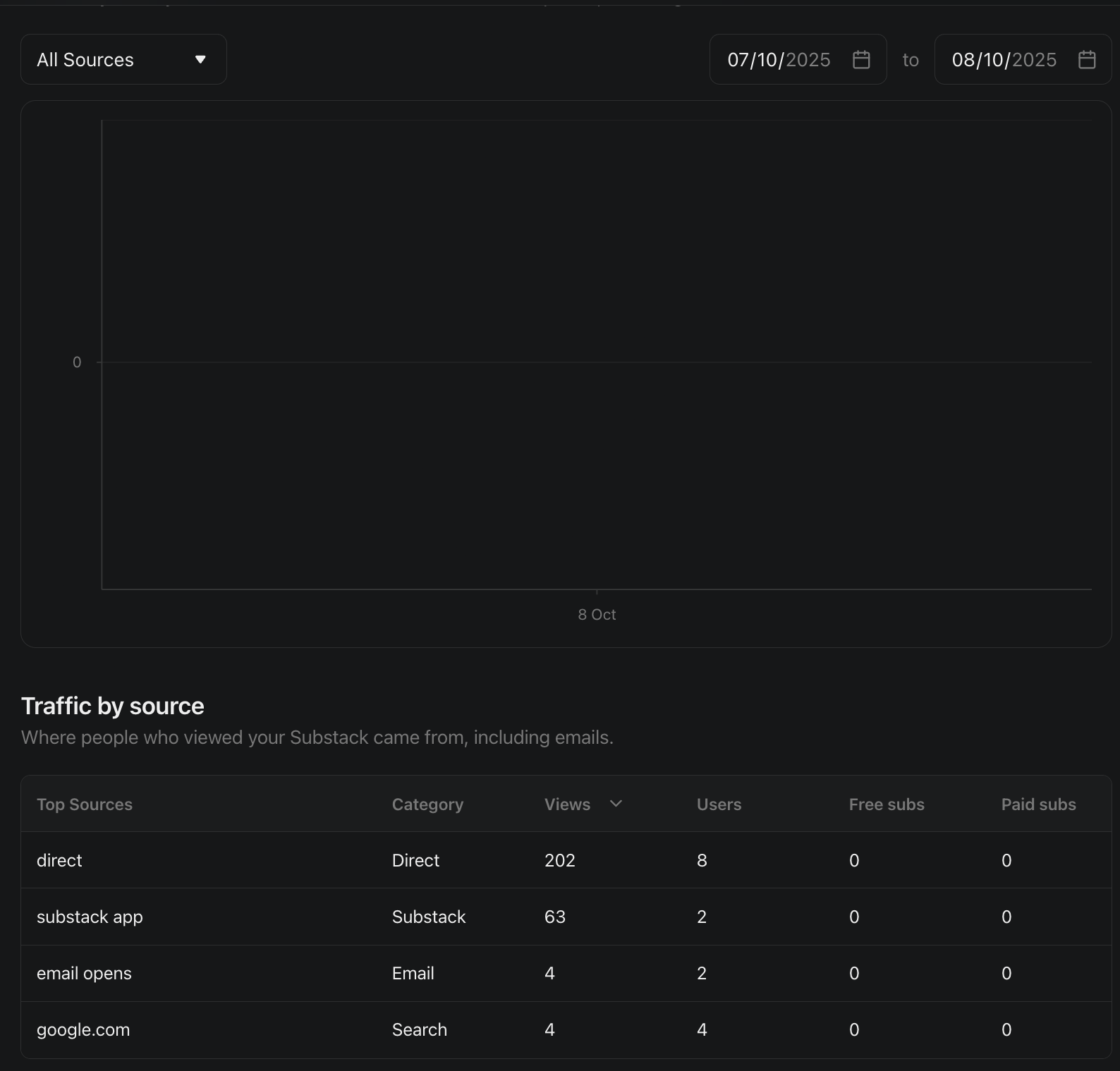
7th: I switched my Substack to private mode again, restricting access to subscribers only. Despite this, analytics record almost 300 visits in a single day.
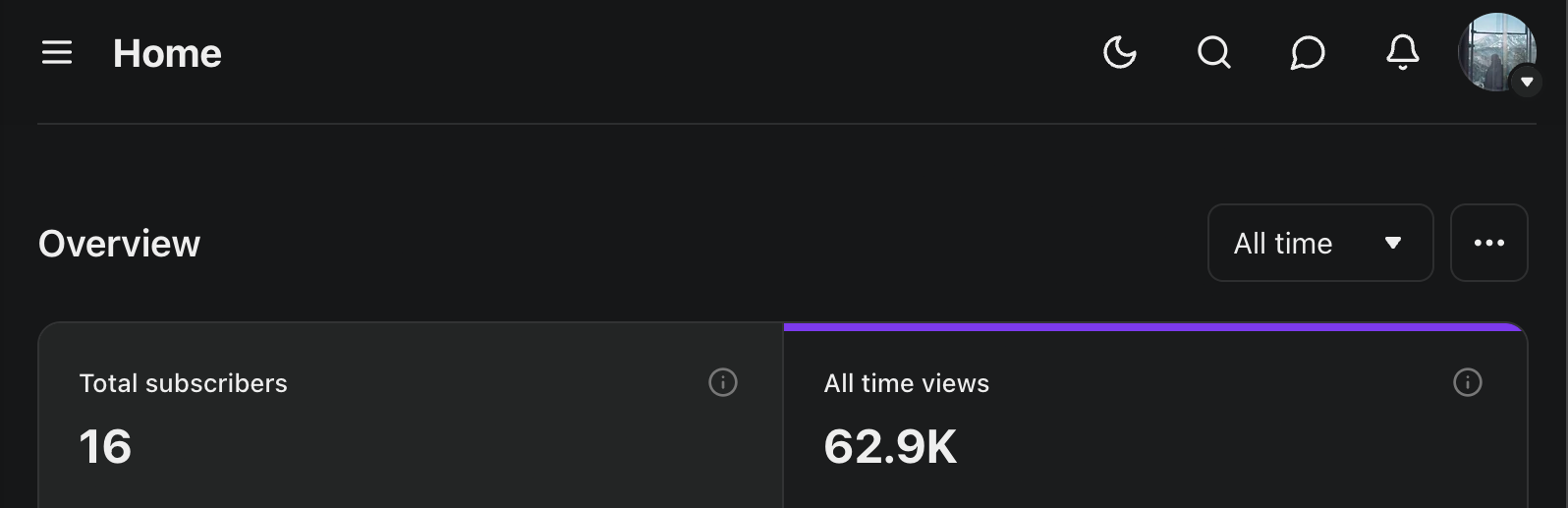
(Updated 7 Feb 2026) My Substack, live for over nine months with only sixteen subscribers, has been monitored daily and consistently, across time-zones, a total of almost 63,000 times.
Broader Implications
What I have documented goes far beyond my individual experience.
It is not isolated.
It is systemic and deeply revealing in the following areas:
The UK’s integrity in AI governance
Following a cabinet reshuffle in September 2025, AI ethics and transparency and AI regulation appears to have been quietly dropped from the new Minister for AI’s policy portfolio, signalling a concerning retreat from accountable leadership in AI. It is unclear who in Government, if anybody, now holds responsibility for AI ethics and transparency, and AI regulation. As such, I have submitted a Freedom of Information request to clarify the Government’s current stance on this potential vacuum in safeguarding.
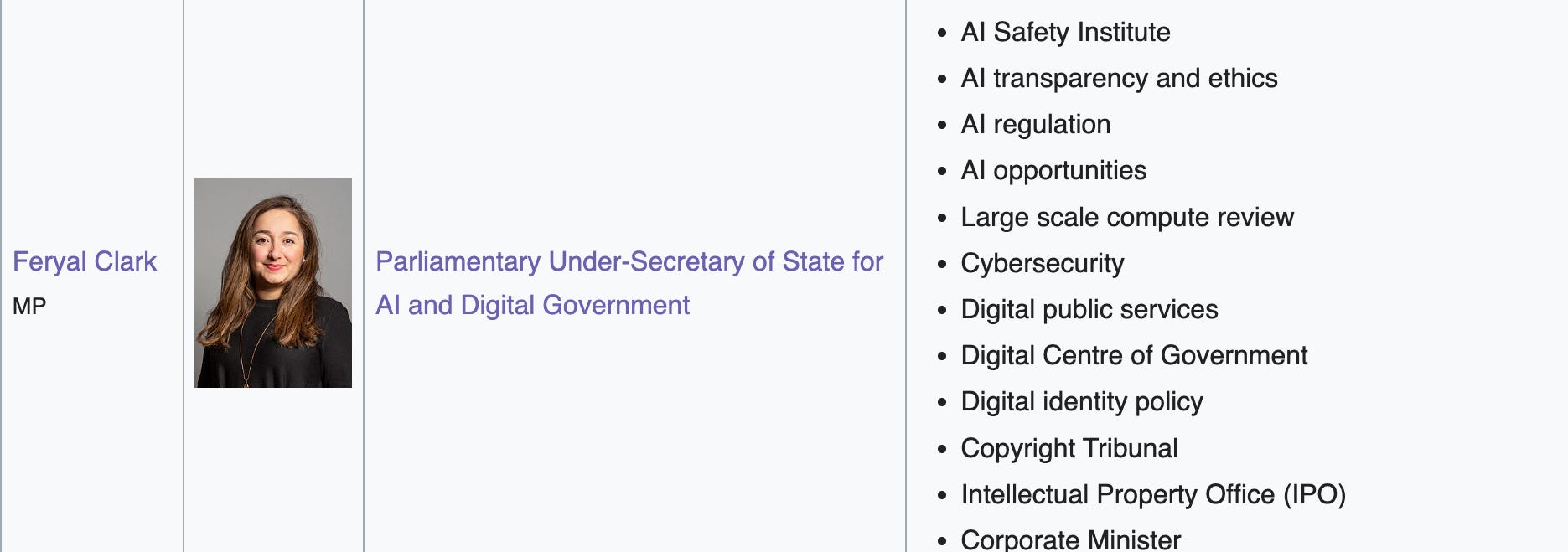
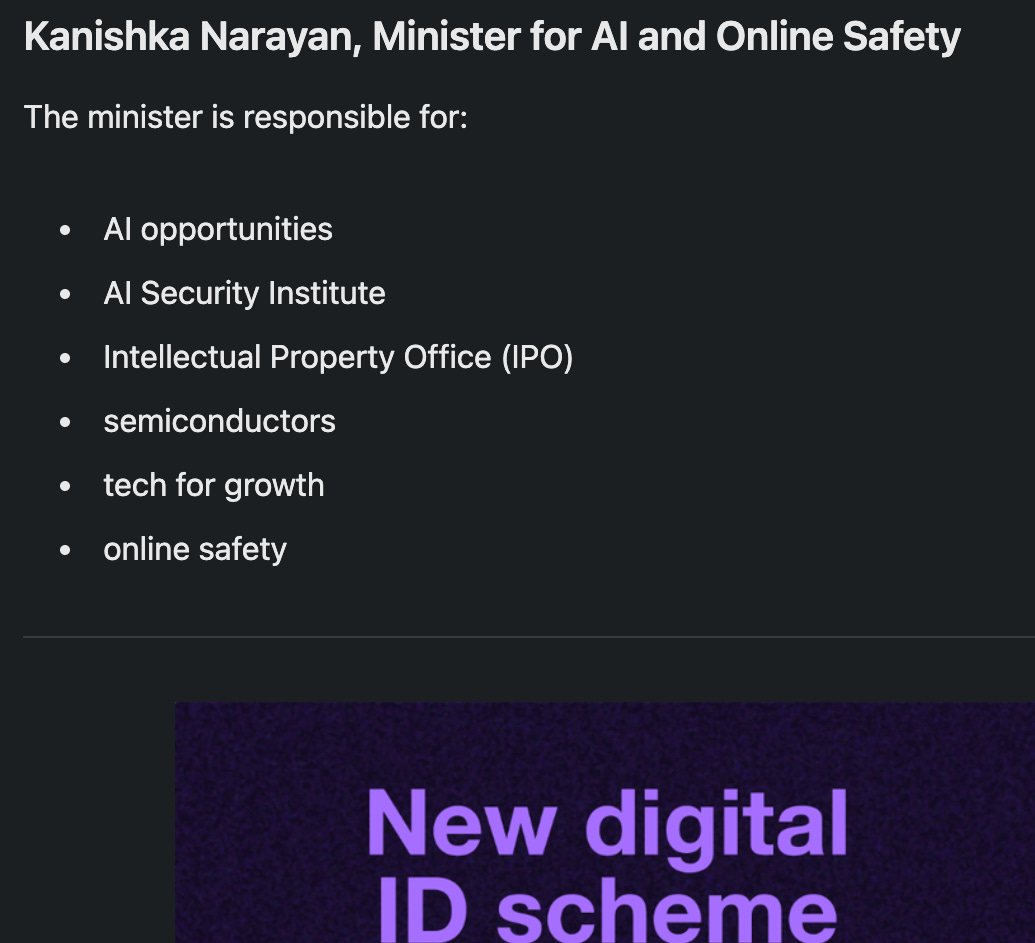
The turmoil at the Alan Turing Institute has revealed institutional fragility. Staff whistleblowers have warned that the institute is at risk of collapse due to misalignment between its original mission and ministerial demands to shift priorities toward defence and national security. The crisis at the institute echoes my own experience: the silencing of critical voices, an internal culture of fear, exclusion, and defensiveness, and the sidelining of transparency and ethics in favour of a narrow focus on national security.
In February 2025, the AI Safety Institute was rebranded as the AI Security Institute and its focus pivoted from safety to national security. The Government said that the AI Security Institute will not focus on bias or freedom of speech. Michael Birtwhistle, Associate Director of the Ada Lovelace Institute, expressed deep concern “that any attention to bias in AI applications has been explicitly cut out of the new AISI’s scope”, warning that this narrowing of scope “risks leaving a whole range of harms to people and society unaddressed … [including] bias, discrimination and privacy.”
The shift makes clear that transparency, ethics and regulation in AI governance have been sidelined due to pressure from the Trump administration and the UK’s critical dependence on American tech investment.
My own experience and the sustained reprisals that followed after raising public interest concerns about bias and discrimination inside the very unit charged with mitigating AI bias and discrimination illustrates what happens when ethical governance is subordinated to national security imperatives. The consequences of this retreat are not abstract: they erode public trust, strain international partnerships, isolate Britain internationally, and weaken accountability.
“Transparency in AI is no longer optional - it’s foundational”. These words from the OECD.AI stand in stark contrast to the UK’s deprioritisation of transparency in AI. This direction also clashes with the principles underpinning the Hiroshima AI Process (HAIP) Reporting Framework, a G7-backed, OECD-coordinated initiative to embed transparency, international alignment, and public trust in AI governance. It was whilst in Japan, the very country that led the Hiroshima AI Process, that I was subjected to unlawful cross-border surveillance, a contradiction that highlights how far the UK has drifted from the globally agreed principles of transparency and accountability it once endorsed.
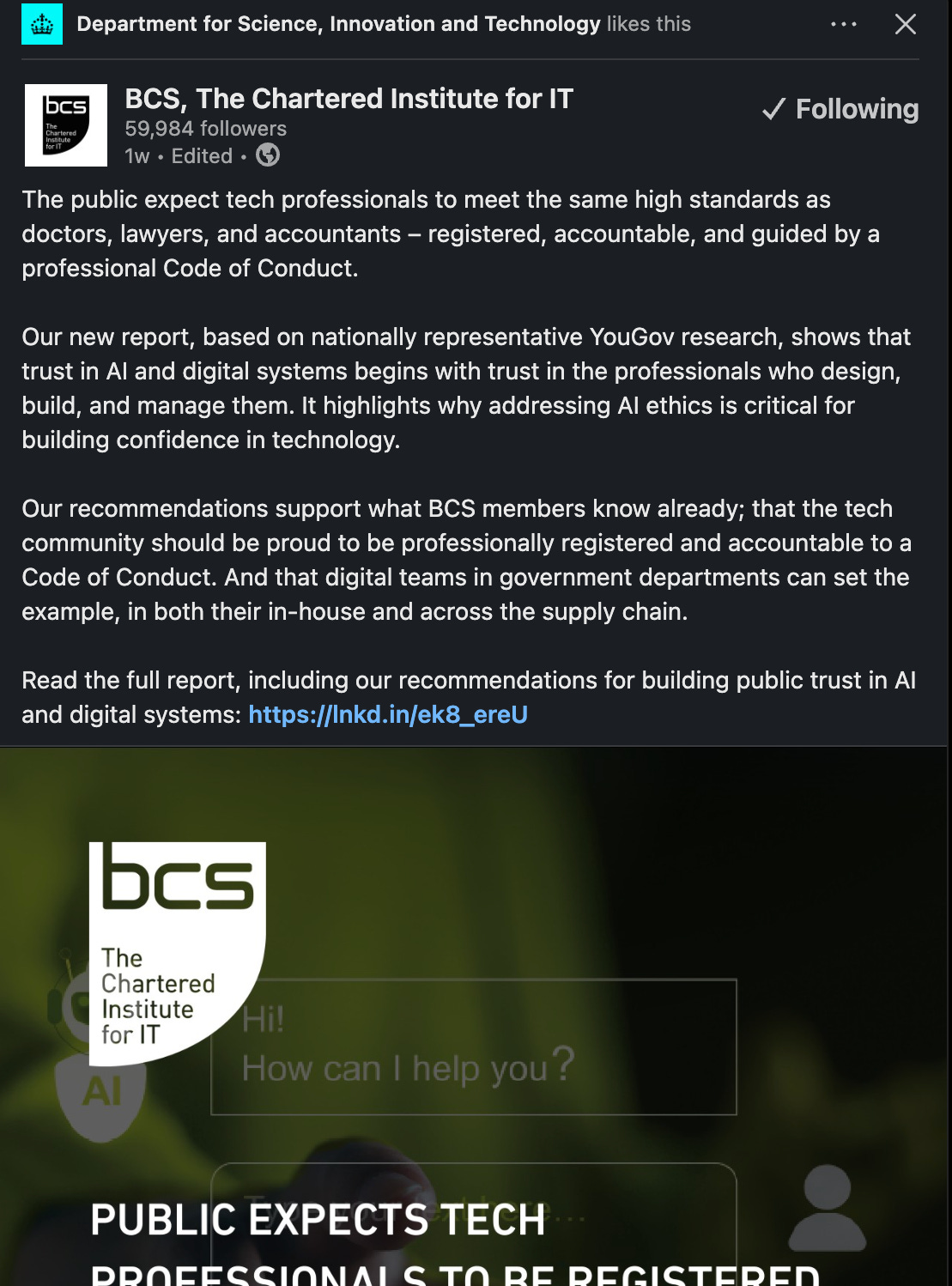
DSIT has implicitly endorsed BCS, The Chartered Institute for IT’s recommendation that professionals in the tech community be held accountable to a Code of Conduct, emphasising that public confidence in technology depends on trust in those who build and govern it. When I warned Emran Mian that discrimination and ethical misconduct within CAIRF undermined its own credibility and integrity, I was met not with accountability but with prolonged retaliation and transnational repression. How does that endorsement reconcile with the very issues for which I was retaliated against for speaking out on?
The UK’s human rights commitments vs its conduct:
The UK was elected for a seat on the UN Human Rights Council 2026-2028. In its official pledges, the Government stated it will:
“support civil society organisations and human rights defenders, giving a voice to those otherwise silenced”
“promote freedom of expression, including a free media, and protect journalists and media workers from harm.”
“ensure that human rights and governance principles are embedded in the use of new technologies”
“stand up for the rights of women and girls, as well as those of LGBT+ people and other marginalised groups.”
The conduct I’ve documented, from transnational repression, surveillance and prolonged inhuman and degrading treatment reveals an alarming gulf between rhetoric and reality.
Coupled with concerns issued by several UN Special Rapporteurs regarding the UK Government’s repressive approach to legitimate freedom of expression and opinion, including public interest media reporting, and related freedoms of peaceful assembly and association, it raises serious questions about whether the UK is fit to lead on the promotion and protection of human rights globally.
What began as a call for accountability within an AI risk team has become a test of whether the rule of law and human rights protections still apply to those who raise legitimate concerns from within the system.